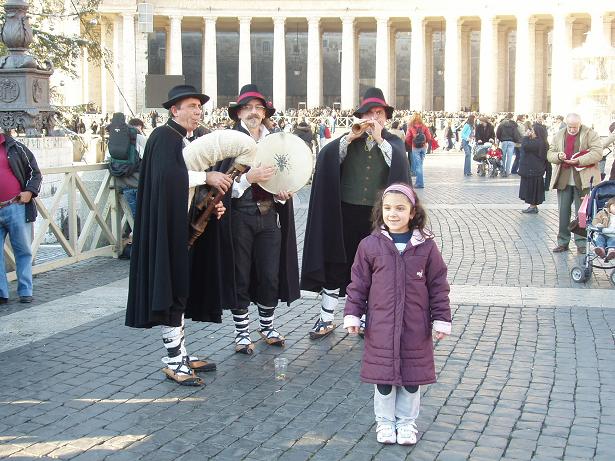
lucy wrote:
¿ìÏ°࣬¿´µ½Ð¡ÕÔ~ µãÃûÒªÕÕƬ£¬ ´ÒæÖдÓÍøÉÏÕÒÁËÒ»ÕÅÌùÔÚÉÏÃ棬 ûÏëµ½¾Í·¸´íÎóÁË£¡:(
СÕÔÒª¿´ÄãÔÚÂÞÂíµÄÕÕƬѽ¡«¡«
ÖÁÓÚÂí¿ËÍÂΣ¬ËûҲȥ¹ýÂÞÂí¡£¿´ËûдµÄÊ¥±ËµÃ´ó½ÌÌãº
Of course we have been to the monster Church of St. Peter frequently. I knew its dimensions. I knew it was a prodigious structure. I knew it was just about the length of the Capitol at Washington - say seven hundred and thirty feet. I knew three hundred and sixty-four feet wide and consequently wider than the Capitol. I knew that the cross on the top of the dome of the church was four hundred and thirty-eight feet above the ground, and therefore about a hundred or maybe a hundred and twenty-five feet higher than the dome of the Capitol. Thus I had one gauge. I wished to come as near forming a correct idea of how it was going to look as possible; I had a curiosity to see how much I would err. I erred considerably. St. Peter's did not look nearly so large as the Capitol, and certainly not a twentieth part as beautiful, from the outside.
When we reached the door and stood fairly within the church, it was impossible to comprehend that it was a very large building. I had to cipher a comprehension of it. I had to ransack my memory for some more similes. St. Peter's is bulky. Its height and size would represent two of the Washington Capitol set one on top of the other - if the Capitol were wider; or two blocks or two blocks and a half of ordinary buildings set one on top of the other. St Peter's was that large, but it could and would not look so. The trouble was that everything in it and about it was on such a scale of uniform vastness that there were no contrasts to judge by - none but the people, and I had not noticed them. They were insects. The statues of children holding vases of holy water were immense, according to the tables of figures, but so was everything else around them. The mosaic pictures in the dome were huge, and were made of thousands and thousands of cubes of glass as large as the end of my little finger, but those pictures looked smooth, and gaudy of color, and in good proportion to the dome. Evidently they would not answer to measure by. Away down toward the far end of the church (I thought it was really clear at the far end, but discovered afterward that it was in the center, under the dome) stood the thing they call the baldachino - a great bronze pyramidal framework like that which upholds a mosquito bar. It only looked like a considerably magnified bedstead - nothing more. Yet I knew it was a good deal more than half as high as Niagara Falls. It was overshadowed by a dome so mighty that its own height was snubbed. The four great square piers or pillars that stand equidistant from each other in the church and support the roof, I could not work up to their real dimensions by any method of comparison. I knew that the faces of each were about the width of a very large dwelling house front (fifty or sixty feet) and that they were twice as high as an ordinary three-story dwelling, but still they looked small. I tried all the different ways I could think of to compel myself to understand how large St. Peter's was, but with small success. The mosaic portrait of an Apostle who was writing with a pen six feet long seemed only an ordinary Apostle.
But the people attracted my attention after a while. To stand in the door of St. Peter's and look at men down toward its further extremity, two blocks away, has a diminishing effect on them; surrounded by the prodigious pictures and statues, and lost in the vast spaces, they look very much smaller than they would if they stood two blocks away in the open air. I "averaged" a man as he passed me and watched him as he drifted far down by the baldachino and beyond - watched him dwindle to an insignificant school-boy, and then, in the midst of the silent throng of human pygmies gliding about him, I lost him. The church had lately been decorated, on the occasion of a great ceremony in honor of St. Peter, and men were engaged now in removing the flowers and gilt paper from the walls and pillars. As no ladders could reach the great heights, the men swung themselves down from balustrades and the capitals of pilasters by ropes to do this work. The upper gallery, which encircles the inner sweep of the dome, is two hundred and forty feet above the floor of the church - very few steeples in America could reach up to it. Visitors always go up there to look down into the church because one gets the best idea of some of the heights and distances from that point. While we stood on the floor one of the workmen swung loose from that gallery at the end of a long rope. I had not supposed before that a man could look so much like a spider. He was insignificant in size, and his rope seemed only a thread. Seeing that he took up so little space, I could believe the story then that ten thousand troops went to St. Peter's once to hear mass, and their commanding officer came afterwards and, not finding them, supposed they had not yet arrived. But they were in the church, nevertheless - they were in one of the transepts. Nearly fifty thousand persons assembled in St. Peter's to hear the publishing of the dogma of the Immaculate Conception. It is estimated that the floor of the church affords standing room for - for a large number of people; I have forgotten the exact figures. But it s no matter - it is near enough.
They have twelve small pillars in St. Peter's, which came from Solomon's Temple. They have also - which was far more interesting to me - a piece of the true Cross, and some nails, and a part of the crown of thorns.
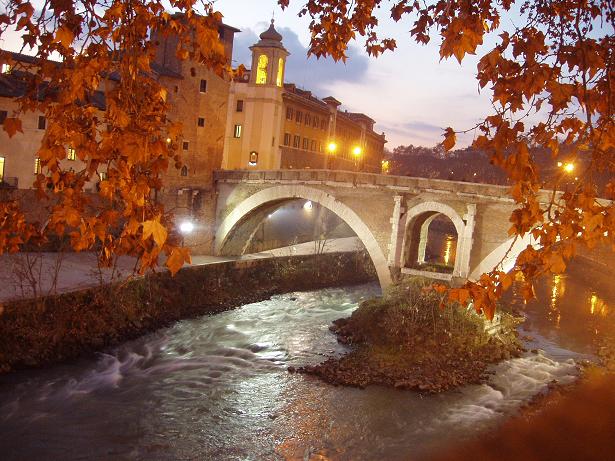
Of course we ascended to the summit of the dome, and of course we also went up into the gilt copper ball which is above it. There was room there for a dozen persons, with a little crowding and it was as close and hot as an oven. Some of these people who are so fond of writing their names in prominent places had been there before us - a million or two, I should think. From the dome of St. Peter's one can see every notable object in Rome from the Castle of St. Angelo to the Coliseum. He can discern the seven hills upon which Rome is built. He can see the Tiber, and the locality of the bridge which Horatius kept "in the brave days of old" when Lars Porsena attempted to cross it with his invading host. He can see the spot where the Horatii and the Curiatii fought their famous battle. He can see the broad green Campagna, stretching away toward the mountains, with its scattered arches and broken aqueducts of the olden time, so picturesque in their gray ruin, and so daintily festooned with vines. He can see the Alban Mountains, the Appennines, the Sabine Hills, and the blue Mediterranean. He can see a panorama that is varied, extensive, beautiful to the eye, and more illustrious in history than any other in Europe. About his feet is spread the remnant of a city that once had a population of four million souls; and among its massed edifices stand the ruins of temples, columns and triumphal arches that knew the Caesars and the noonday of Roman splendor; and close by them, in unimpaired strength, is a drain of arched and heavy masonry that belonged to that older city which stood here before Romulus and Remus were born or Rome thought of. The Appian Way is here yet, and looking much as it did, perhaps, when the triumphal processions of the emperors moved over it in other days bringing fettered princes from the confines of the earth.
-- Mark Twain, The Innocents Abroad (1869)




 Î÷°àÑĄ̀½×- ÂÞÂí¼ÙÈÕ


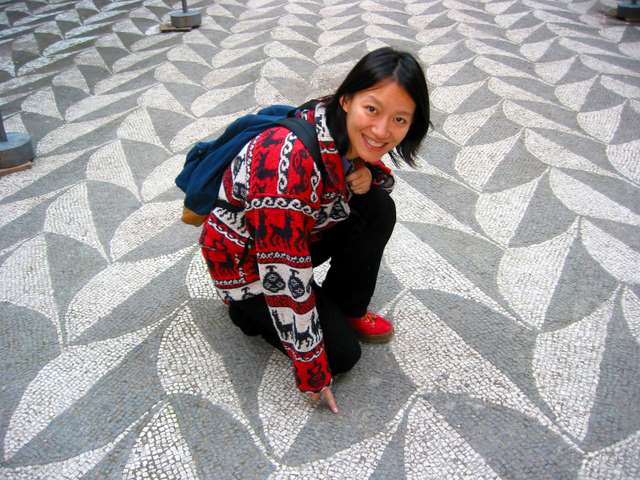
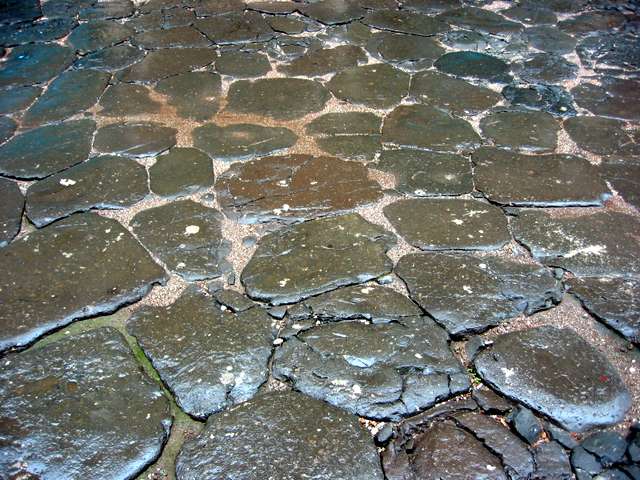
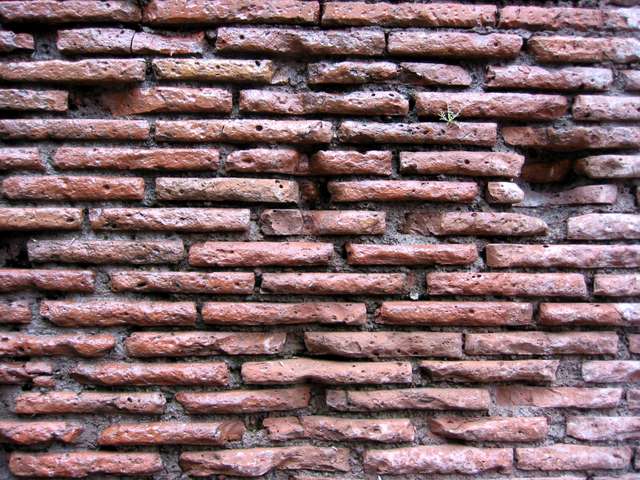
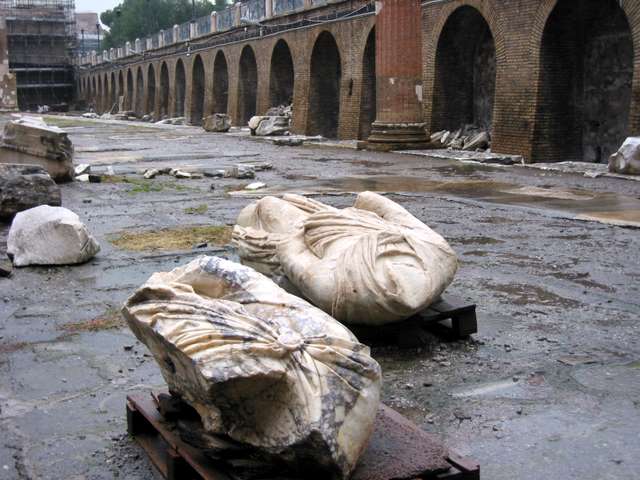


 ¡¡
¡¡ ¡¡
¡¡

 Vatican